
By Propzine – Bengaluru’s Trusted PropTech Platform
Real estate investors, developers, and asset managers today rely heavily on data-backed analysis before committing capital. In Bengaluru’s fast-evolving real estate landscape—where land values fluctuate, rental demand grows unevenly across micro-markets, and development timelines face regulatory complexities a structured real estate financial model becomes essential. A strong pro forma real estate model not only estimates project profitability but also guides strategic decisions on acquisitions, development, financing, and risk management.
Understanding the Foundation of a Real Estate Pro Forma
A real estate pro forma is essentially a forward-looking financial statement that projects the future cash flows of a property or development. It acts as a roadmap for assessing feasibility, capital requirements, expected returns, and potential risks. Whether you're analyzing a Grade-A office acquisition in Outer Ring Road or evaluating a mixed-use development in Whitefield, the property investment model in Excel helps quantify assumptions and benchmark performance. For Bengaluru’s proptech-led ecosystem, digital tools and automation have made pro forma modeling more accurate, dynamic, and easier to update as conditions change.
Revenue Projections: The Core of Any Real Estate Financial Model
Revenue forecasting forms the backbone of every real estate pro forma. Analysts typically begin with market rent assumptions derived from comparable properties, absorption trends, and demand drivers. In Bengaluru, submarkets like North Bengaluru, Sarjapur Road, and Bannerghatta Road show differing rental dynamics office rents may follow IT-led absorption, while residential rents respond to population growth and metro connectivity. A robust real estate financial model includes scheduled rents, lease escalations, vacancy periods, renewal probabilities, and early termination scenarios. For development projects, pre-sales velocity or pre-leasing commitments significantly influence revenue outlook.
Operating Expenses: Breaking Down the Cost Structure
Every property carries recurring expenses that affect net operating income (NOI). A well-structured pro forma real estate model categorizes costs into utilities, common area maintenance, repairs, insurance, property management fees, taxes, and marketing. Bengaluru’s regulatory environment—especially BBMP property taxes and RERA compliance—adds unique layers to operational costs. Maintaining detailed expense drivers ensures that the model accurately reflects cash flow performance and helps identify efficiency opportunities through better procurement or technology integrations.
Capital Expenditure Planning: Forecasting Long-Term Asset Needs
CapEx planning is a critical but often underestimated part of real estate feasibility studies. These expenditures include major renovations, mechanical system upgrades, lobby improvements, or façade enhancements. In Bengaluru’s competitive commercial market, cyclical upgrades are essential to maintain Grade-A standards. A thorough pro forma lists initial development costs, phased reinvestments, and contingencies. Developers must also consider interest during construction (IDC) and escalation risks, especially given fluctuating input prices across steel, cement, and logistics.
Debt Service and Financing Structure: Calculating Leverage Impact
Financing decisions significantly influence project viability. Investors typically evaluate multiple funding structures—construction loans, lease rental discounting, mezzanine financing, or equity partnerships. A strong development financial analysis incorporates interest rates, loan-to-cost ratios, amortization schedules, and refinancing opportunities. Bengaluru developers increasingly use hybrid financing models due to rising capital requirements in large-scale residential and commercial projects. The pro forma must calculate debt service coverage ratios (DSCR), breakeven occupancy levels, and the impact of varying interest rate environments on long-term cash flows.
Equity Returns: Measuring IRR, Cash-on-Cash, and Equity Multiple
The ultimate goal of any real estate investment model is to analyze returns. The most commonly used equity return metrics include Internal Rate of Return (IRR), Cash-on-Cash Return, and Equity Multiple. IRR helps investors evaluate the time-adjusted value of future cash flows, while Cash-on-Cash indicates annual income relative to equity invested. Equity Multiple captures the total return on a project over its lifecycle. For Bengaluru-based investors, sensitivity to exit cap rates, rental escalations, and absorption timelines can dramatically influence these metrics. That’s why advanced pro forma models simulate multiple return scenarios to account for market unpredictability.
Sensitivity Analysis: Testing the Model Against Market Volatility
No financial model is complete without stress-testing key variables. Sensitivity tables allow investors to visualize how changes in occupancy, rent growth, cap rates, and construction timelines impact profitability. In rapidly evolving micro-markets like Hebbal, Devanahalli, and Electronic City, these assumptions can shift quickly. Well-structured models test a range of conditions best case, base case, and worst case providing a holistic view of risks and opportunities.
Scenario Planning: Guiding Smarter Decision-Making for Developers and Investors
Scenario planning elevates a pro forma from a simple spreadsheet to a strategic decision-making tool. Developers create multiple scenarios based on demand variations, regulatory approvals, construction delays, or economic shifts. A Bengaluru-based project may need scenarios that incorporate metro expansion timelines, tech-sector hiring cycles, or changes in commercial leasing patterns. Scenario modeling helps investors decide whether to acquire, hold, or exit an asset, and identifies optimal pricing, phasing, and financing strategies.
Best Practices for Structuring a Real Estate Financial Model
A clean, transparent model ensures accuracy and investor confidence. The best practices include keeping assumptions separate from calculations, linking all inputs through formulas, avoiding hardcoding, and using modular worksheets for revenue, expenses, financing, and returns. Tools like Excel, Google Sheets, and proptech platforms offer automation features that streamline updates. For Bengaluru's competitive market, well-documented pro forma models not only support internal decision-making but also improve communication with lenders, JV partners, and investors.
Conclusion: Pro Forma Models Are Essential for Success in Bengaluru’s Dynamic Market
As Bengaluru continues to be India’s fastest-growing real estate hub—driven by IT expansion, startup activity, infrastructure upgrades, and a maturing investment market—data-driven financial modeling has become indispensable. A precise, well-structured real estate financial model empowers investors and developers to make informed decisions, minimize risk, and capitalize on emerging opportunities. Whether you're acquiring an income-generating commercial asset or planning a large-scale residential development, a robust pro forma remains your strongest tool for strategic success.
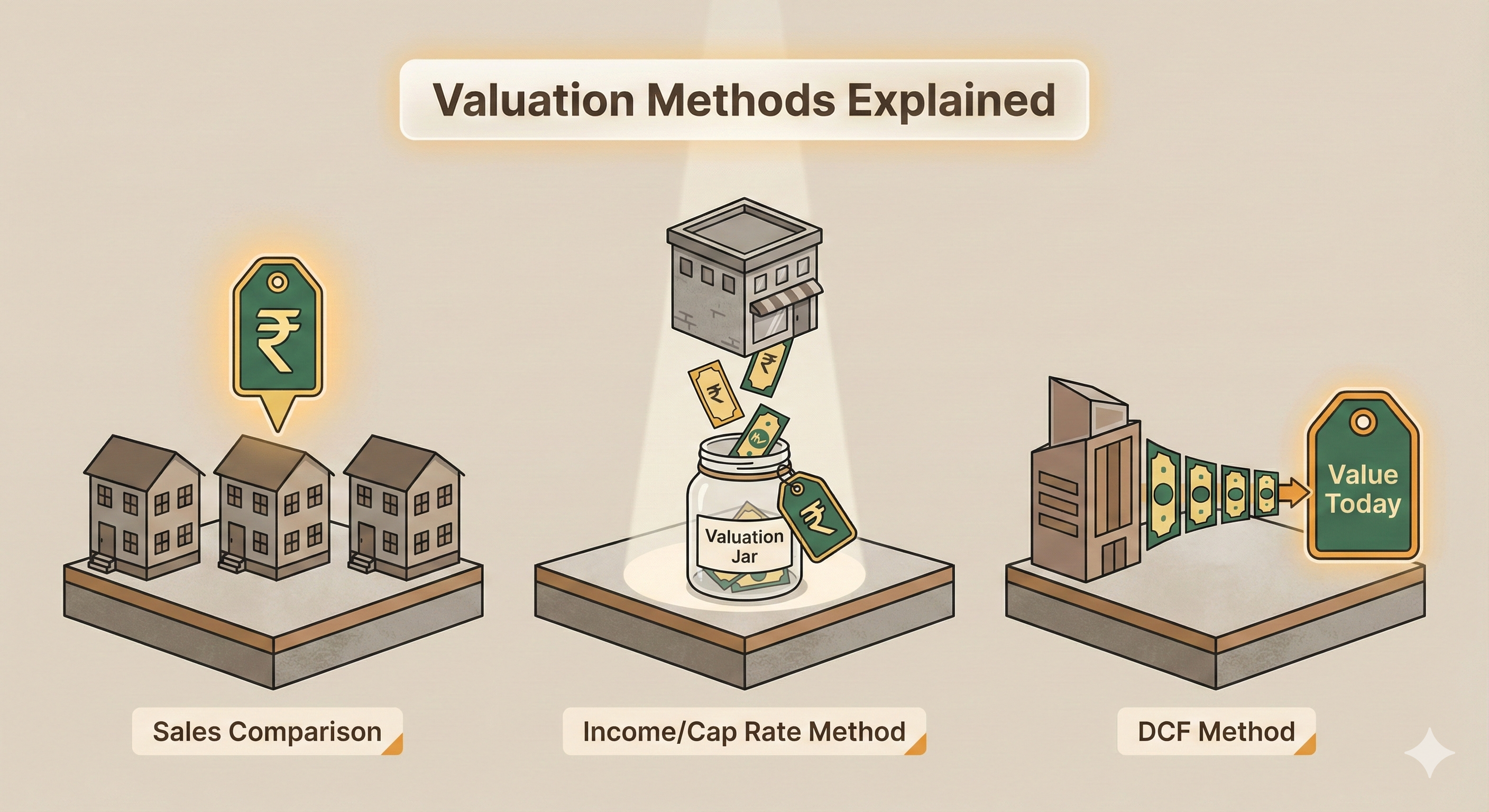

 Method for Real Estate.png)