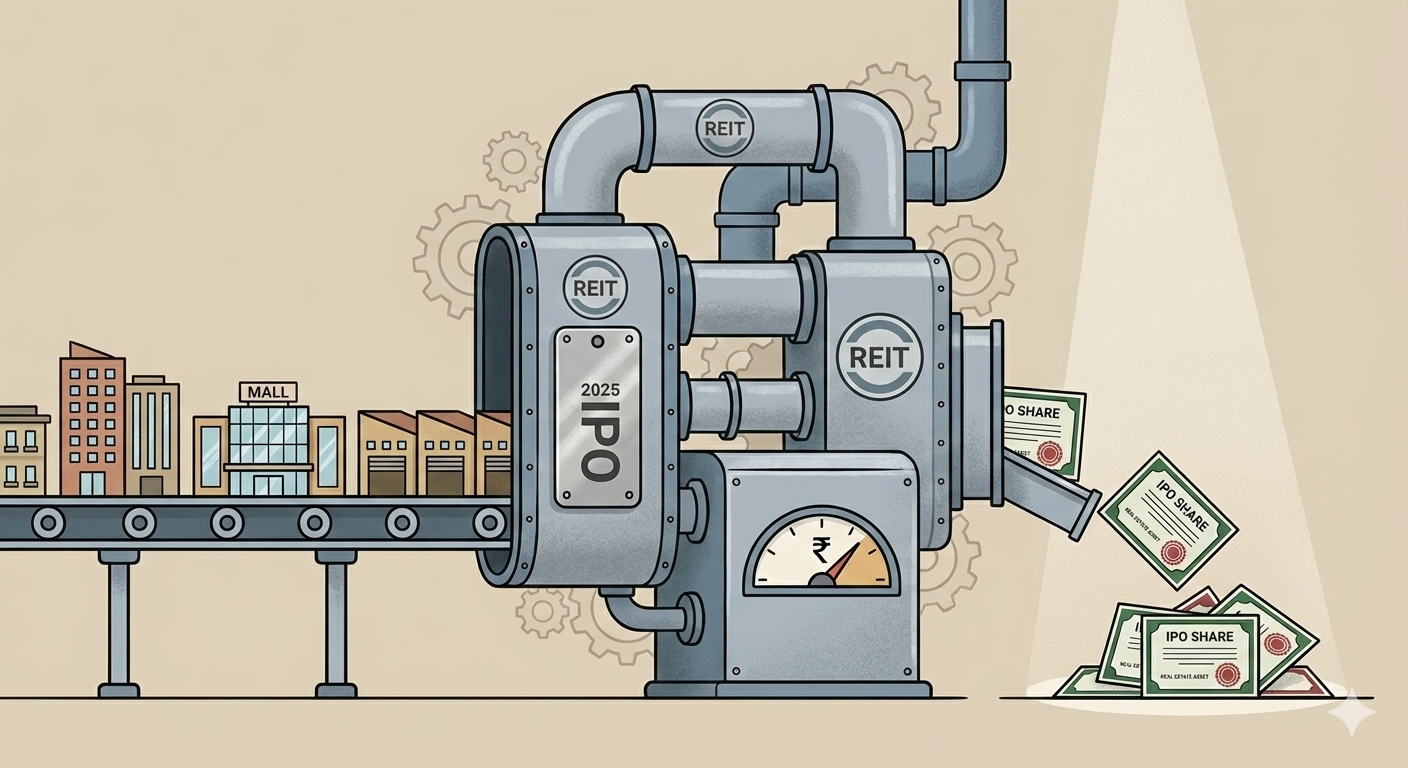
India’s real estate sector is entering a new phase of capital market maturity, and the REITs IPO Pipeline 2025 is at the center of this shift. With five REIT IPOs raising ₹805 million and four Qualified Institutional Placements (QIPs) fetching another ₹344 million in Q3 2025, investor appetite for income-yielding real estate assets is rising once again. For both institutional investors and retail wealth builders, this momentum signals a deeper evolution in how real estate is owned, financed, and monetized in India.
As a Bengaluru-based proptech platform, Propzine has been closely tracking how REIT listings and digital capital flow systems are shaping the property landscape—especially as commercial and alternative real estate segments show unprecedented transparency and liquidity.
The REIT Capital Markets Comeback: What’s Driving the 2025 Momentum
After a cautious 2023–24 cycle, global capital markets have turned increasingly optimistic toward Indian real estate. Lower interest rate pressures, stronger leasing activity in Grade A offices, and heightened demand for income-yielding assets have created the perfect conditions for REITs to accelerate fundraising.
The standout event of the quarter was the Knowledge Realty Trust IPO, which alone mobilized ₹547 million, making it the largest REIT listing of 2025 so far. Its success has reinforced foreign institutional investor confidence, particularly in sectors like IT parks, managed workspaces, and mixed-use office ecosystems.
With yields stabilizing and operating metrics improving, REITs are no longer viewed as niche investment products they are becoming mainstream vehicles aligned with India’s long-term commercial real estate growth story.
Five REIT IPOs & Four QIPs: What This Means for Developers and Investors
The ₹805 million raised via IPOs highlights an important trend: developers are shifting toward structured, asset-backed fundraising rather than traditional bank lending. This reduces project-level risk and gives investors access to professionally managed, large-scale commercial properties that previously remained inaccessible.
The four QIPs that brought in ₹344 million also signal that listed REITs are leveraging strong market conditions to refinance debt, unlock liquidity, and expand their portfolios through acquisitions across office, retail, and logistics sectors.
This capital cycle isn’t just beneficial for investors it strengthens the entire commercial real estate ecosystem, from developers and asset operators to occupiers seeking long-term stability.
Why International Capital Is Pouring Into India’s REIT Landscape
One of the biggest drivers of the 2025 REIT surge is heightened participation from foreign institutional investors. India offers a rare combination of:
• High rental growth visibility
• Sustained office absorption in tech cities like Bengaluru, Hyderabad, Pune, Chennai
• Regulatory stability under the SEBI REIT framework
• Strong dollar-hedged returns compared to global markets
For FIIs, REITs offer predictable returns at a time when commercial real estate in several Western markets is dealing with high vacancy and refinancing stress. India’s economy, particularly the tech-driven office hubs, provides a counter-cyclical opportunity.
How the 2025 REIT Pipeline Will Shape India’s Real Estate Market
The wave of IPOs and QIPs marks the beginning of a more structured, financially disciplined real estate cycle. Over the next 12–18 months, the market will likely see:
• More developers using REIT structures for commercial and retail assets
• New sub-asset classes entering REIT markets, such as warehousing, data centres, and co-living
• Greater investor participation due to low entry barriers
• Enhanced liquidity in India’s commercial real estate sector
Most importantly, India is moving toward a globally aligned real estate financing ecosystem one where transparency, compliance, and investor mobility define asset ownership.
Final Outlook: A Bigger, Stronger, More Transparent Real Estate Market Ahead
The REITs IPO Pipeline 2025 is more than just a fundraising trend—it’s a sign that India’s commercial real estate sector is maturing into a globally competitive investment market. With rising institutional participation, stronger governance standards, and proptech-led operational efficiency, REITs are poised to reshape the next decade of growth.
For investors, this is a pivotal moment to watch. And for cities like Bengaluru, where new-age offices and tech parks continue to expand rapidly, REIT-led capital flows will define the next wave of urban growth.