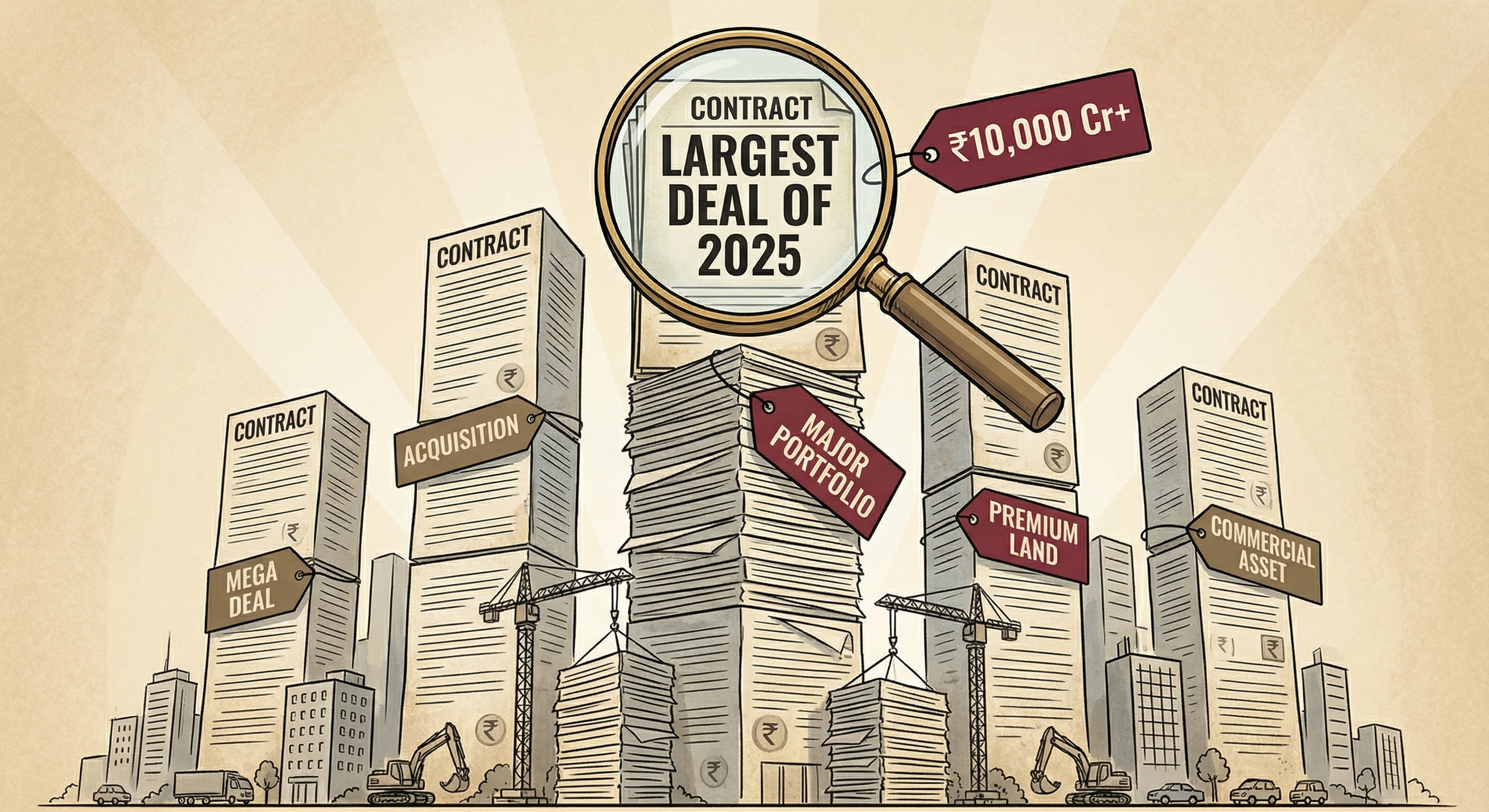
India’s retail real estate landscape has entered a defining moment in 2025 with Blackstone’s ₹3,250 crore acquisition of Kolkata’s South City Mall, a landmark move that has quickly become one of the largest mall deals ever recorded in the country. For a sector that has matured from fragmented assets to institutionally-owned retail destinations, this transaction is more than an investment — it is a strategic signal. As a Bengaluru-based proptech brand observing these shifts closely, Propzine breaks down what this acquisition means for Indian retail real estate, the rise of income-producing mall assets, and why global private equity continues to bet big on Indian consumption-led growth.
South City Mall: A High-Performing Retail Asset With Exceptional Revenue Strength
South City Mall has long been regarded as Kolkata’s crown jewel in modern retail. Spread across nearly 1 million sq. ft., the asset attracts consistent footfall, hosts premium brands, and enjoys a prime location within the city’s most affluent micro-market. What truly sets it apart is its financial performance: the mall generates an impressive ₹1,800 crore in annual revenue, making it one of the highest-grossing retail assets in India. With such strong fundamentals, Blackstone’s decision to acquire the mall at ₹3,250 crore underscores the rising value of fully stabilized, income-generating commercial property transactions in India.
Why Blackstone Bet Big: The Institutional Shift Toward Retail-Led Investments
Blackstone’s entry into South City Mall marks a continuation of its long-term thesis on Indian retail assets. Global investors are increasingly seeking opportunities that balance yield, resilience, and scalability, and retail real estate deals in India are emerging as ideal vehicles for these ambitions. The push towards premium malls is driven by structural trends: India’s consumption economy is expanding faster than most global peers, organized retail penetration is rising, and Tier 1 city malls are outperforming nearly every other commercial asset class in terms of rent growth, tenant retention, and experiential demand.
Strengthening a Pan-India Retail Portfolio With a Flagship Eastern Market Asset
For Blackstone, the acquisition also strengthens its already significant portfolio of mall assets across major metros. Consolidating a high-performing asset in a key eastern market gives the firm geographic balance and deepens its position in a region with limited Grade A retail supply. South City Mall’s track record of near-full occupancy, robust leasing cycles, and consistently upgraded tenant mix aligns perfectly with the PE giant’s philosophy of owning and scaling top-tier, experience-led retail spaces.
Institutional Confidence in Retail: Why Malls Have Become Stable Revenue Engines
Beyond the numbers, the deal signals something deeper for India’s evolving property landscape: retail is no longer a risky or cyclical bet, but an institutional asset class delivering steady returns. While office and industrial real estate continue to grow, malls that demonstrate strong revenue productivity are becoming preferred choices for investors seeking long-term stability. Rising consumer spending, lifestyle-oriented buying, and the shift from unorganized to organized retail formats continue to boost profitability, turning Indian malls into high-demand, low-risk investment platforms.
Proptech’s Expanding Role in the Modern Mall Ecosystem
For developers and proptech players, this shift is opening new opportunities. As institutional owners like Blackstone scale their retail portfolios, the demand for data-driven mall management, footfall analytics, tenant performance insights, and digital experience layers is accelerating. A Bengaluru-based proptech ecosystem like the one Propzine operates within will play an increasingly strategic role in modernizing India’s malls through smart technology, leasing intelligence, operational automation, and tenant engagement tools.
Conclusion: A Transformational Deal Signaling the Future of Indian Retail Real Estate
The ₹3,250 crore Blackstone–South City Mall acquisition is not merely a big-ticket headline; it is a clear indicator of the direction India’s retail real estate sector is headed. With stable revenues, strong demand indicators, and growing investor appetite, Grade A malls are cementing their place as one of the country’s most powerful institutional asset classes. As domestic consumption rises and global capital flows deepen, more such transformational acquisitions will shape the future of Indian retail infrastructure and 2025 is only the beginning.